The film 'Eternal Sunshine Of a Spotless Mind' and it's 'Eternal' and 'Spotless'.
- Shilpi Seth

- May 30, 2020
- 4 min read

Cast- Jim Carrey, Kate Winslet, Mark Ruffalo, Elijah Woods
Director- Michel Gondry
Screenplay- Charlie Kaufman
Year of release- 2004
Valentine’s Day, “today is a holiday when greeting card companies make people feel like crap”—and that’s how the ‘romance/sci-fi’ movie starts. Back in the day when technology had not advanced to what we call today’s basic—to be able to erase one’s memory was called fiction then. The science it took as fiction has started to come true. Joel (played by Jim Carrey) wakes up feeling something unusual (perhaps a certain emptiness). He knows something happened but what? He goes on with his day, trying to be goofy, flunks his day at office to go to the Montauk beach in the freezing month of January. He isn’t an impulsive person, an awkward, introverted cartoonist. Memories from the last two years have disappeared—he doesn’t know how. He meets a girl called Clamentine (played by Kate Winslet) in Montauk. What are the odds, they have known each other for two years before becoming strangers? Knowns? No, lovers. The movie begins after Joel has gone through a medical procedure to erase Clamentine from his memory, after he learns of her betrayal—and, they meet again. Reminds me of a boomerang, what goes around comes around. Or should we say that we cannot escape what we were destined to?
Joel Barish is withdrawn from the world, away from people and gatherings, the usual mind-my-own-business type. Clamentine Kruczynski is the exact opposite, she is outgoing, talkative, friendly and impulsive, and she wears hair color called ‘blue ruin’.

The voice-over makes us familiar with Joel, the narration takes place in Joel’s head while he is undergoing the procedure. At a moment, something changes his mind and he rushes to preserve one last memory of her. He takes her to places where they don’t belong, to hide her in other memories (or parts of the brain) for them to escape the erasure. The sudden urge to rescue her presents the dilemma of a childish brain that wanted no trace of her in the first place. This makes the narrator start backwards, in a non-linear manner, and strangely, it never gets confusing. The memories press play, reverse, pause, fast forward and rewind all at the same time—similar to how our brains works, hopping from one thing to the other. The movie loses its direction for instances where Joel’s thoughts take us to his childhood—to hide Clamentine from the erasure. He takes us to his most fond memories, his childhood, the uncertainties and the fights. Here, the viewer might notice how eerie, they found the best in their usual moments, made the best of what they had.

"Will this procedure cause brain damage?" asks Joel as the helmet is lowered on to his skull. "Technically," says Wilkinson gravely, "this procedure is brain damage.” The technicians present the other narrative of the story, taking the procedure too lightly, perhaps they seem to not care about the patients, perhaps to bored of the procedure. It is uncanny to see so many people want to erase their memories. Does it include you and I too? Mark Ruffalo’s character Stan and his assistant Patrick (played by Elijah Woods) are the experts but too casual about the procedure. His girlfriend Mary (played by Kirsten Dunst) has a little something for the clinic head. Later on, in the movie, we get to know they erased the memory their relationship to save his marriage. But again, there is another reminder of what is destined to happen will find its way back around. The movie tends to give closure to a relationship, removing the pain points, offering them oblivion at the cost of self-harm. Post the procedure, they meet again, things begin again.

The cinematography helps the film to not confuse but to understand what is happening. There is a distinction between his thoughts and the reality, the two narratives move ahead independent of each other. The scenes are dimly lit and the camera is shaky, giving it a documentary style. The effects of fading memories, garish colors and strange, vivid landscapes are to represent the world of dreams, contradistinctions different from the reality. The director, Gondry, portrays the film with his expertise and details. The ambiguity makes the film more swaying.
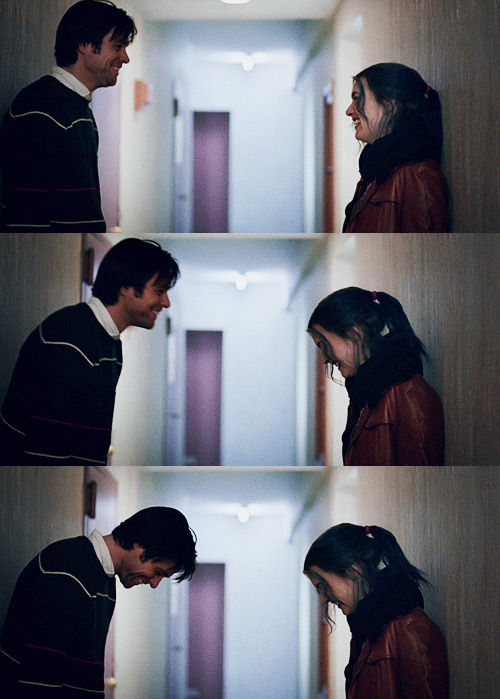
The ending scene, the conversation, where they are listening to their recordings, is when the reality hits, things come back. There is a simultaneous contrast of a new relationship and an old one. The sudden choke of not-knowing-what-you-did is haunting. The recordings made me realize there are so many things that one hides from the other—how you will never know a person in their entirety. How the other person will never know completely how you think about them—the intimidate moments or the judgments. And then there is the self-realization.
Eternal Sunshine is about the need of punishment and redemption, to be free from one’s memory. It is also a reminder of how the past effects the present—it never leaves. By fate or by God’s grace they reunite, understanding the power of true love, and eventually accepting their partner’s flaws. There are moments of love and compassion, dialogues that one remembers (even after all these years).
The movie challenges the illusions of memory, love and the question of ‘would we erase someone if we had a choice’? it relates to the uncanny influences one has on each other, and how life sometimes comes full circle.
The film also has a famous Nietzsche interpretation, used as an illustration of Nietzschean philosophy. He says, in order to survive, human beings forget certain things and episodes. He says that it is a test of one's character in how much they need their instances to be "thinned down, shrouded, sweetened, blunted, falsified." Further, “Have you ever said Yes to a single joy? O my friends, then you have said Yes too to all woe.”: Nietzsche's idea was to live in the present and he believed that everything is linked, and destined to happen. In order to delete the bad memories, they must erase the good ones too. Joel and Clementine are on the road to embark their relationship again, even with the knowledge that they are to fail.
Eventually, not knowing the future or erasing the past we will not be able to enjoy the present, the truth.
Images from Google


Comments